Since my annual ramblings evolved to email circulation some thirty years ago, I have often included some secondary category awards on an ad hoc basis. By the time the next evolution into this blog, one such category, that of The One that Got Away had become a regular award to an album that had escaped my notice at its time of release, but had been picked up some years, occasionally decades, later. Sometimes it was dealt with in a paragraph of the main blog, at others when there were multiple qualifiers it has been the subject of a separate blog. As is the case this year due to reasons that will become evident as you read on.
I can’t say exactly when I evolved from being an author, specifically a Technical Author who documented complex mechanical or electrical processes or pieces of machinery so that others could understand their operation and maintenance, into a historian researching long lost facts and fantasies. I guess that a biographer would note the point that fate caused me to retire from my chosen career earlier than may have been intended, thus providing additional time to delve into subjects that might otherwise have been peripheral.
However, in retrospect, it was probably the point that I drew those columns onto the back page of my school jotter aged 13 years and five months (a few months short of the milestone age of a certain fictional diarist, but sparked by similar teenage passions nonetheless) and filled-in the first entry that began a lifelong record of musical enjoyment. Of course, it wasn’t history at the time, it evolved into that as the years rolled by. Which is why, when I began to jot down my thoughts on what would be my 64th annual entry in that list, that I realised that next year, 2027, would be the 65th year, and a somewhat poignant thought that maybe the time may be approaching to retire from the task.
Historical research is often sparked by a small fact emerging from the past. That fact may be of passing interest that fades in a short while, or it may open a door to more information that teases the mind into wider examination that can, ultimately, prove fruitless. But sometimes it evolves into a need to explain why something happened, and becomes nothing short of a quest. I remember the genesis of one of my projects beginning with a nagging doubt as to why a person who had lived 150 years previous to myself could have been branded by local history as a dashed good chap in one area of his life, and a pariah in another. The serendipitous discovery of some dusty documents in a library opened-up the whole subject and resulted, some six months later, in the publication of a 350-page book not only absolving him of his pariah status entirely, but identifying the identity of the true culprit who had dodged the historical bullet at the time.
So, when I began thinking of what I might do to mark the 65th anniversary of Album of the Year, those thoughts moved to the many lists of classic albums created over the years by other people, such as Robert Dimery’s 1001 Albums to Hear before you Die, Rolling Stone’s 500 Greatest Albums of all Time, and suchlike. I quickly dismissed producing my own Top 100 of all Time as simply too derivative; however, recording coincidence of inclusion was also a bit passe. I needed a more unique and personal angle, which I think I have found, the results of which I hope to bring your way next year – maybe in a different format. Regardless of the ultimate result of what has become my latest quest, the research part formed a major influence on those escapees captured for this year’s One That Got Away.
That research began with the obvious task of identifying those albums in my personal collection that appear in the aforementioned lists – of which there are many more than one might first surmise. To do that, I needed to create a database (ok spreadsheet) of said collection which I could compare with the nominated lists. It is fair to say that I had not quite realised that my physical collection of CDs, amassed since the mid-1980s, now ran into the several thousands – the obvious cause of my dear wife’s regularly furrowed brow on examination of my latest card statement! This includes the CD versions of my previous vinyl collection, which in itself was in the high hundreds amassed over the previous twenty five years before I disposed of them all around the turn of the millennium.
I dread to think how many albums I actually purchased over those years because, having never been one to keep albums I no longer listen to, many were disposed of to finance the acquisition of more ‘product’ to feed my ‘habit’. I have also loaned-out many albums to friends and acquaintances over the years; needless to say, not all returned. So, having created said list of current ‘stock’ to compare to the third-party lists, it rapidly became apparent that there were unexpected gaps in my current collection – by a process of scanning the third party list in question, recognising an album I had purchased back in the mists of time, then finding its absence from my spreadsheet. This resulted in a second spreadsheet containing the gaps.
Now, it is oft-said that ‘absence makes the heart grow fonder’. However, reality proves that is not necessarily always the case, and reacquainting myself with some of those ‘lost’ albums, thanks to the convenience of Spotify, was not quite the emotional experience anticipated – to put it bluntly, I had occasionally bought some crap over the years! Meaning that my secondary list shrank fairly rapidly, but what were left were necessary reacquisitions. And those form the second part of this blog – ones that got away, but only because I let them go.
What was more interesting, however, were the albums in the third party lists that I had never encountered but, due to the short write-ups accompanying them, were clearly worth looking into – these becoming yet another separate list that became the main basis of this year’s One That Got Away.
Finally there were those that I had encountered during the year by my normal process of listening to a lot of music; so maybe we should start with them – firstly three albums from the recent past:
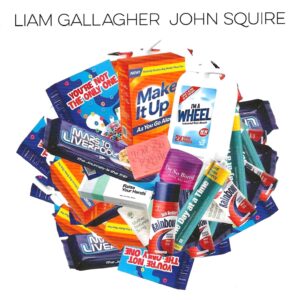 Liam Gallagher John Squire (2024)
One would have thought that Liam Gallagher teaming-up with Stone Roses guitarist John Squire would have lit-up all the lights on my music-detector, but I have to admit Liam Gallagher John Squire passed me by completely. Which was a real shame, as it is a very listenable album, and would have easily made that year’s top ten; if you feel like evoking the Madchester vibe thirty years on, then check-out Raise Your Hands and Just Another Rainbow in particular.
 Sombr – I Barely Know Her (2025)
At the other end of the industry-experience scale comes Sombr, aka Shane Michael Boose from New York, whose debut album this is. It was released towards the end of last year, and has made the album chart in many countries since. It has also spawned half a dozen top ten singles both here and in the ‘States, probably the better-known being Undressed and 12 to 12. A bit poppy in places, but still worth a listen.
Sinners Original Motion Picture Soundtrack
I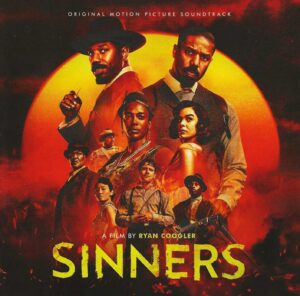 ’m not much into movie soundtracks, but occasionally one pops up that cannot be ignored. We spent a couple of months over the turn of the year visiting our daughter in Australia, along with a few other countries en route both ways. So a lot of time watching long-haul movies, one of which was Sinners. Now, it has to be said that the storyline starts OK, then sort-of deteriorates around halfway to a point that, normally, I would probably have searched for an alternative. But I didn’t because the soundtrack is stunning – a mix of Delta Blues, Bluegrass, Soul and modern dance music. This is not a movie where some production executive simply loaded-up a few of their all-time favourite tracks into a mish-mash of musical diversion, this one is clearly integrated with the basic plot. And that plot, however weird it becomes, is totally rooted in the 1930s deep south. So we have old 1930s original tracks mixed with established blues artists like Buddy Guy, Bobby Rush and Cedric Burnside, intermixed with Brittany Howard from Alabama Shakes, Rhiannon Giddens from the California Chocolate Drops (and New Basement Tapes) and Jerry Cantrell from Alice in Chains, topped-off with a few newbies, the outstanding star of which is Miles Caton – what a voice! But the stand-out track, for me, is Pale Pale Moon preformed twice on the album, once by writer Brittany Howard and the other an outstanding performance by actress Jayme Lawson.
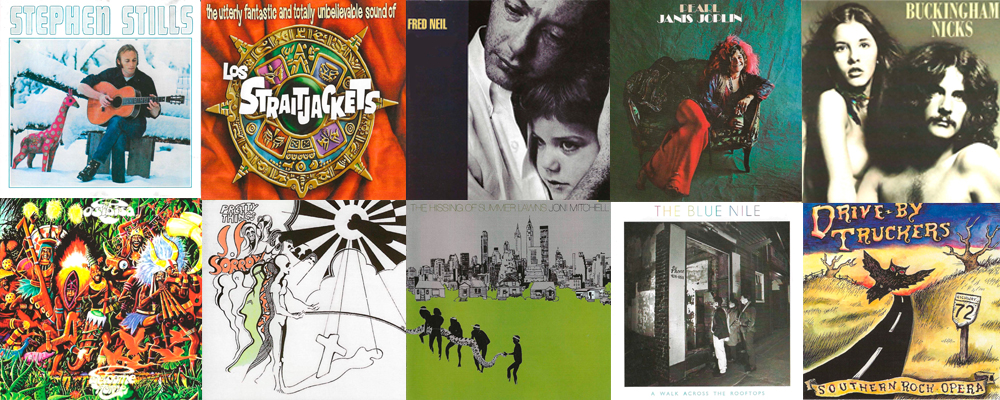
The Utterly Fantastic and Totally Unbelievable Sound of Los Straitjackets (1995)
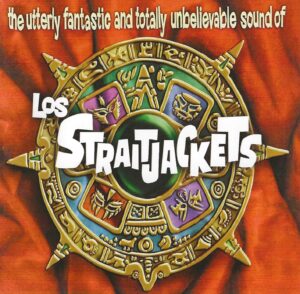 Another film I caught, this time on Netflix, was Sound of the Surf – a documentary on the development of the early surf music scene in 1950s California, well before the Beach Boys emerged – the sound of the likes of Dick Dale, the Surfaris and Link Wray. This resulted in my finding a great compilation of that era called Surf Essentials. But the documentary then progressed through not one, but two revivals, the latter of which was in 1990s northern mainland Europe of all places – not a place one might envision Shootin’ the Curls. And from this era came footage of a band called Los Straitjackets, with the bizarre mixture of performing their own original tracks of 1950s-esque surf music dressed in black suits and Mexican wrestling masks! But perform they can, and still do, hence the acquisition of their 1995 debut album The Utterly Fantastic and Totally Unbelievable Sound of Los Straitjackets.
Adriano Celentano – Nostalrock (1975)
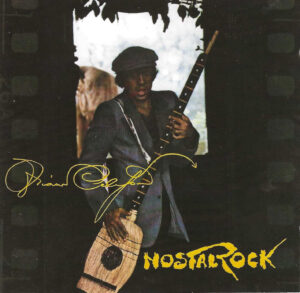 Next comes an album purchase prompted by a TV advert – something that hasn’t happened for a while. You may have seen the lager advert where a beautiful classic wooden speedboat travels across the Venice Lagoon with the driver accompanied by harmonica playing foxes – the sort of thing you see every day in that part of the world. Well, the track is called Prisencolinensinaiciusol (long titles appearing in vogue this year) by Italian singer Adriano Celentano who, explaining the apparent gibberish lyrics, said he created it “to demonstrate how English sounds to people who do not understand the language.” It is on his 1975 album Nostalrock, which is an intriguing combination of period ballads and covers of 1950s Rock n Roll classics. Never say I don’t introduce you to some ‘out there’ stuff!
Frank Sinatra – Songs for Swinging Lovers (1956)
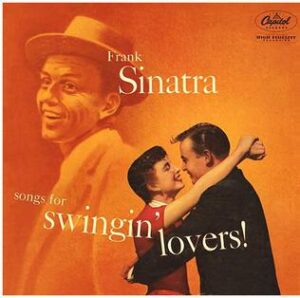 Finally in this section an album from a really long way back. I wrote a short blog earlier in the year on the 70th anniversary of the start of the UK Album Chart, mentioning that very first number one album – Frank Sinatra’s Songs for Swinging Lovers. I was never one for standards and crooners, but having listened to it a couple of times, I was really taken by the quality of the tracks and, almost, innocence of the times in which they were made. And so it joined the collection, and has been a regular play since doing so.
The next section is albums that ‘escaped’ over the years. I won’t list them all but merely observe that my various music suppliers have been much more welcoming than usual on recent visits! I will mention five, all from the early 1970s, that fell into a category of being far better than I remembered them all those years back:
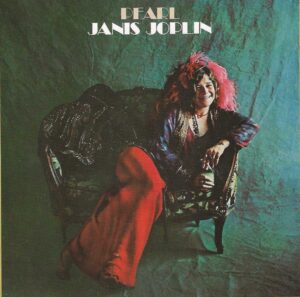 Janis Joplin – Pearl (1971)
One, if not ‘the’ voice of early rock music, Janis is one of the members of the infamous 27 Club of musicians who died at that tragically young age. This was only her second solo album, and was posthumously released. It includes some great tracks, including Cry Baby and her very final recording – Mercedes Benz. It shows what a loss she was to Rock Music, as does an earlier 1968 album from Big Brother and the Holding Company, Cheap Thrills, for whom she was lead singer at the time, and which also returned to my fold recently.
Stephen Stills (1970)
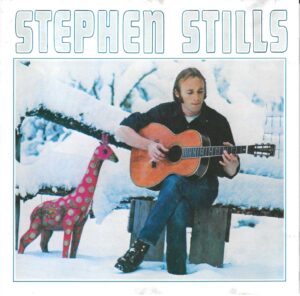 Stephen Stills is someone who featured heavily on my turntable in the late 60s/early 70s. He came to the fore with Buffalo Springfield in the mid-1960s, and wrote their early hit For What It’s Worth which was my first encounter with him. He then linked up with David Crosby and Graham Nash to become Crosby, Stills & Nash, to which his bandmate in Buffalo Springfield, Neil Young, joined to add the suffix ‘and Young’. I pretty-much bought all of his/their output up to the mid-1970s, then a much later album American Dream which was my Album of the Year in 1988. So I still can’t figure out how this, his first solo album, went walkabout, but such is life. It has some great tracks, particularly Do for the Others and the hit single Love the One You’re With.
Buckingham Nicks (1973)
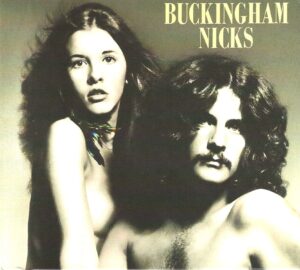 This was the debut album from the duo who went on to form an essential part of the second iteration of Fleetwood Mac. The album was classed by the industry as a commercial failure, mainly because it wasn’t promoted at all by their record company. Except that a track from it was heard by Mick Fleetwood who invited the duo to meet him, resulting in their joining the band. So I guess it depends how you interpret the term ‘commercial failure’! I originally found this on cassette in a record store disposal bin back in the 70s, after buying the first Fleetwood Mac album they played on in 1975, now known as the White Album. It was Stevie Nicks’ vocals on Rhiannon that grabbed me then, and I still find her voice both fabulous and unique. When I converted the collection to CD in the 80s, I discovered it was never released on CD, but found out as part of this quest that was, thankfully, rectified last year by this reissue. It is a great album, and just shows what gems go missing through record company inertia.
Osibisa – Welcome Home (1975)
I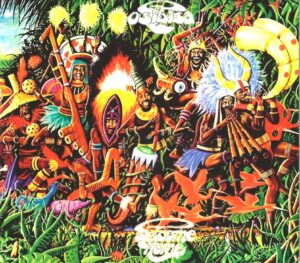 t was the inclusion of one of their tracks in the Prog Prom that reminded me of this album I had purchased some fifty years ago, but which had disappeared from the collection. I still don’t really get how they were classed as a Prog Rock act though, and yes, I know they provided backing instrumentals on a Uriah Heep album, but I guess these days they would be considered as part of the ‘World Music’ genre. Regardless, this is a delightful album guaranteed to brighten any day, particular highlights being Sunshine Day and the title track.
Joni Mitchell – The Hissing of Summer Lawns (1975)
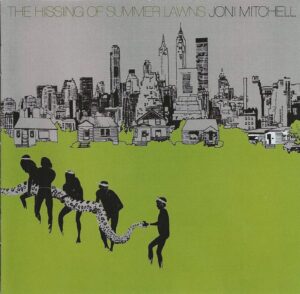 Having acquired Blue when it was released in 1971, I then bought her following couple of albums, but remember them not being as accessible. This was the final album of hers that I purchased and, again, I didn’t connect with it at the time and so it went the disposal route a couple of years later. I guess our connection to things changes as we get older, so listening to it again fifty years later, I couldn’t understand how that had happened. It is quite simply outstanding, and there has barely been a day since its reacquisition that I have not played it.
And so to the best of those that I had never previously encountered, until going through those third party lists:
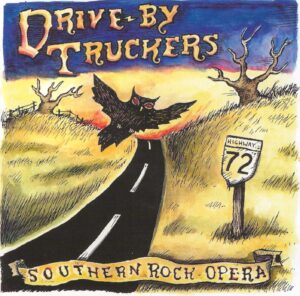 Southern Rock Opera – Drive-by Truckers (2002)
Formed in 1996 by Patterson Hood and Mike Cooley in Athens, Georgia (also home of R.E.M and B-52s) Drive-by Truckers are a five-piece rock band who built a dedicated following through constant touring over their first five years. They also made a couple of albums, but it was this double-album, their third, that really put them on the map. It is a concept album about a fictitious 1970s southern rock band called Betamax Guillotine, loosely based on the story of the well-known southern rock band Lynyrd Skynyrd. If you are into that genre, you will love this album.
A Walk Across the Rooftops – The Blue Nile (1983)
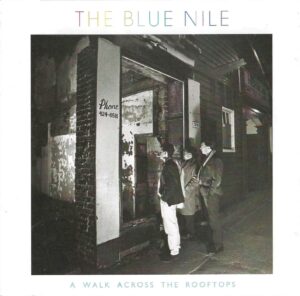 The Blue Nile were one of the many Scottish synth-pop bands that emerged in the early 1980s. This was their debut album and was also the first release by a label launched by Hi-Fi speaker manufacturer Linn. As well as creating a chart-hit single, Tinseltown in the Rain, it received a lot of critical acclaim, and is certainly an interesting listen being a somewhat more sparse sound than some of their peer groups of the time in this genre. Hence it is easy to see why they should attract the interest of a HiFi company, as the innate cleanness of their sound certainly lights-up my main system.
S F Sorrow – The Pretty Things (1968)
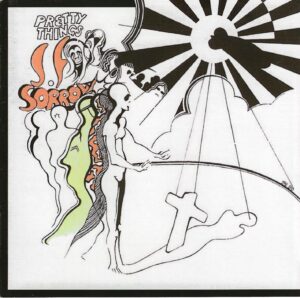 I was never a great fan of The Pretty Things back in the ‘sixties, seeing their output more as a somewhat inferior version of that coming from the Rolling Stones at the time. That’s not as surprising a comparison as may be thought, as both bands had members who were at the same grammar school in Sidcup at the time – in fact guitarist Dick Taylor was a founding member of the Stones, but moved to study in London, so never recorded with them. A year later he formed The Pretty Things with another fellow Sidcup student, vocalist Phil May. This, their fourth release, is a concept album, hence should have appeared on my radar at the time, but the fact that it was being recorded at Abbey Road at the same time as Pink Floyd’s Saucerful of Secrets and the Beatles’ White Album, and hence also released at the same time, is probably a good reason why it effectively sank without trace as a commercial success, causing a somewhat disillusioned Taylor to leave the band. Nowadays, it is seen as the very first rock opera, preceding Tommy by nearly a year. Although it could not be considered as superior to Pete Townshend’s first epic, listening to it now with the benefit of hindsight it is quite easy to see that it was, perhaps, a bit ahead of its time. It certainly has that psychedelic feel more reminiscent of the US West Coast sound of the time.
Fred Neil (1967)
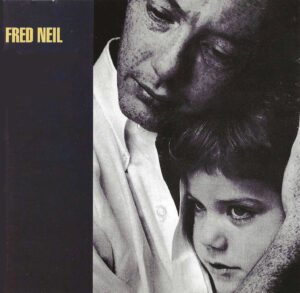 Talking of ‘off the radar’, not only did this album pass me by, so also did the artist himself. Originally from Ohio, by the late 1950s Fred Neil was a professional songwriter working in New York’s historic Brill Building, uptown from Tin Pan Alley, where he co-wrote hits for Buddy Holly and Roy Orbison among others. He was also a prominent folk singer in Greenwich Village where, apparently, a young Bob Dylan was sent to meet him on his arrival in the city in the early sixties, later performing with Fred on stage. Fred later moved to Coconut Grove in Florida and by the time he recorded this, his third, album he was mixing his time between there and Woodstock. A lot of his tracks were covered by better-known artists of the time such as the Lovin’ Spoonful, Jefferson Airplane, Linda Ronstadt, It’s a Beautiful Day and Richie Havens. On this album are two very well-known tracks, Everybody’s Talkin’ (Harry Nilsson) which was used for the film Midnight Cowboy, winning Fred a Grammy, and the opener The Dolphins (Tim Buckley). He pretty-much removed himself from the music scene during the 1970s to co-found the Dolphin Research Project, a Florida organization dedicated to stopping the exploitation of dolphins worldwide, which he was devoted to up to his death in 2001. A marvellous songwriter with a fabulous voice, this is not only this year’s One That Got Away, but also – at nearly sixty years – the new record holder for the album that stayed away the longest!
I have compiled a playlist containing fifty of the best tracks from these albums, including the ones that didn’t make the shortlist. To stream the playlist on Spotify, click the logo below:

If you want to stream any of the individual albums mentioned, links are provided in the following table:
| Artist | Album | Stream | |
 | Fred Neil | Fred Neil |  |
 | The Pretty Things | S F Sorrow | |
 | Joni Mitchell | The Hissing of Summer Lawns | |
 | Lindsey Buckingham & Stevie Nicks | Buckingham Nicks | |
 | Steven Stills | Steven Stills | |
 | Liam Gallagher & John Squire | Liam Gallagher John Squire | |
 | Original Motion Picture Soundtrack | Sinners | |


